Planning A Successful Summer
Building Independence One Small Step At A Time
May was a busy month.
It's filled with end-of-year school activities, awards ceremonies, concerts, projects, field days, and countless other events that somehow all land on the calendar at once. For any disability parent who has already many part-time jobs, we add more: part-time project managers, tutors, and event coordinators as we help our children cross the finish line of another school year.
For parents of children with Prader-Willi syndrome (PWS), May brings even more responsibility. Not only are we navigating the usual end-of-school chaos, but we're also celebrating PWS Awareness Month. While managing schedules and school obligations, we're advocating, educating, and sharing our stories to raise awareness about a condition that impacts every aspect of our children's lives.
This year was also the PWSA | USA Washington, DC Fly-In. Dr. Pacha and I, alongside approximately 170 members of our community, we added travel, schedule changes, disrupted routines, and advocacy meetings to an already packed month. It was meaningful work, but like many things in the PWS world, it required additional energy during an already demanding season.
And somewhere in the middle of all of that, there was Mother's Day. To which all three moms at EmpowerED Solutions laughed about, knowing the demands of May.
I hope every mother reading this had at least one day where she felt appreciated, celebrated, and truly seen.
We now find ourselves standing at the beginning of another summer.
If you're anything like me, that anticipation comes with a mix of excitement, fear, and anxiety. Not only because our children with PWS often struggle with changes in routine, but because we know exactly what summer can demand from us as parents.
Last summer, my daughter was six years old, and if I'm being honest, I felt like I was drowning.
The constant management was exhausting. I couldn't walk away to switch a load of laundry without hearing, "Mom! Help me!" Every task felt interrupted. Every moment alone felt impossible. The mental load of being needed every second of every day weighed on me in ways I never expected.
This summer, however, I'm approaching things differently.
The idea didn't come from me. Like many of my best parenting strategies, it came from my daughter’s behavioral therapist.
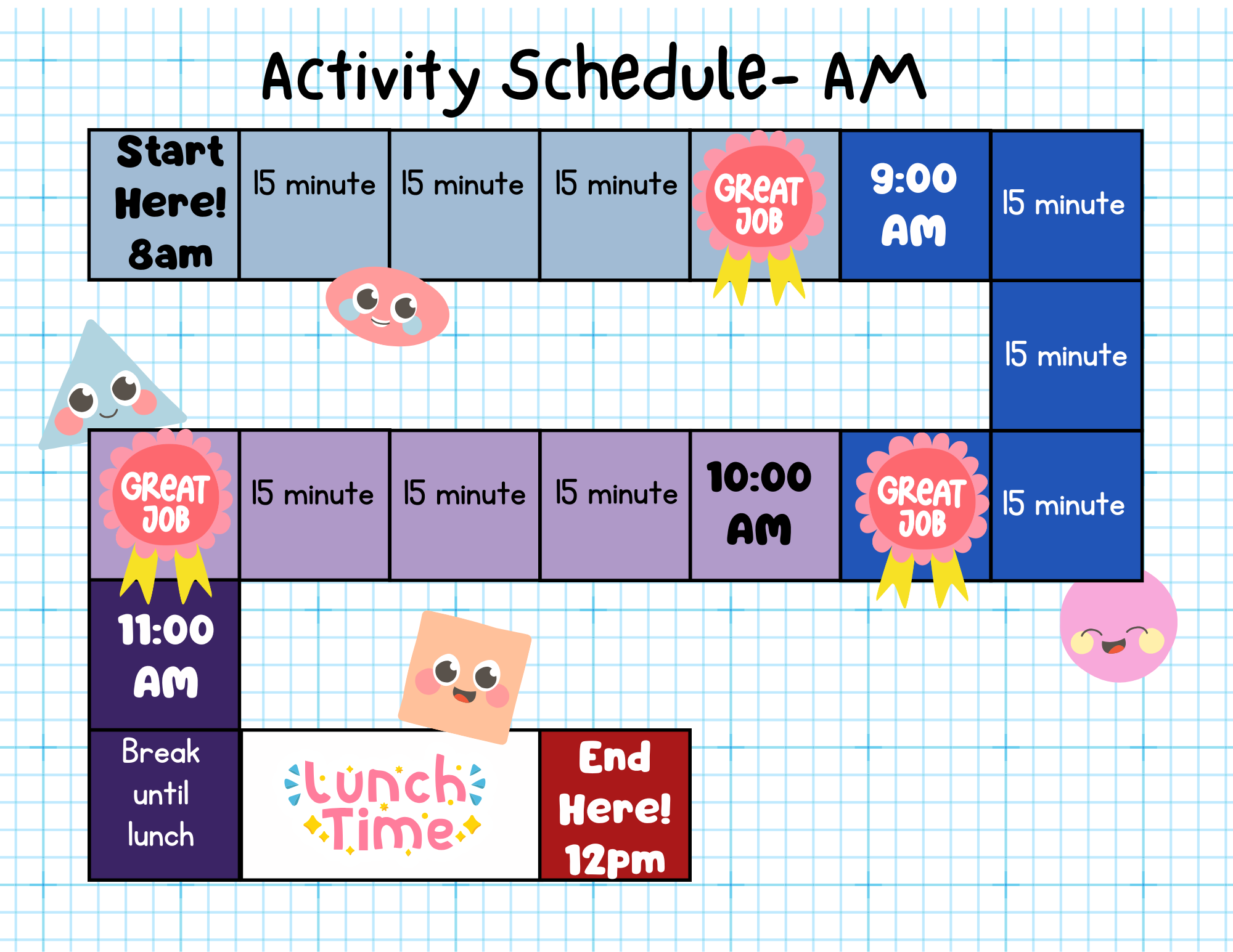
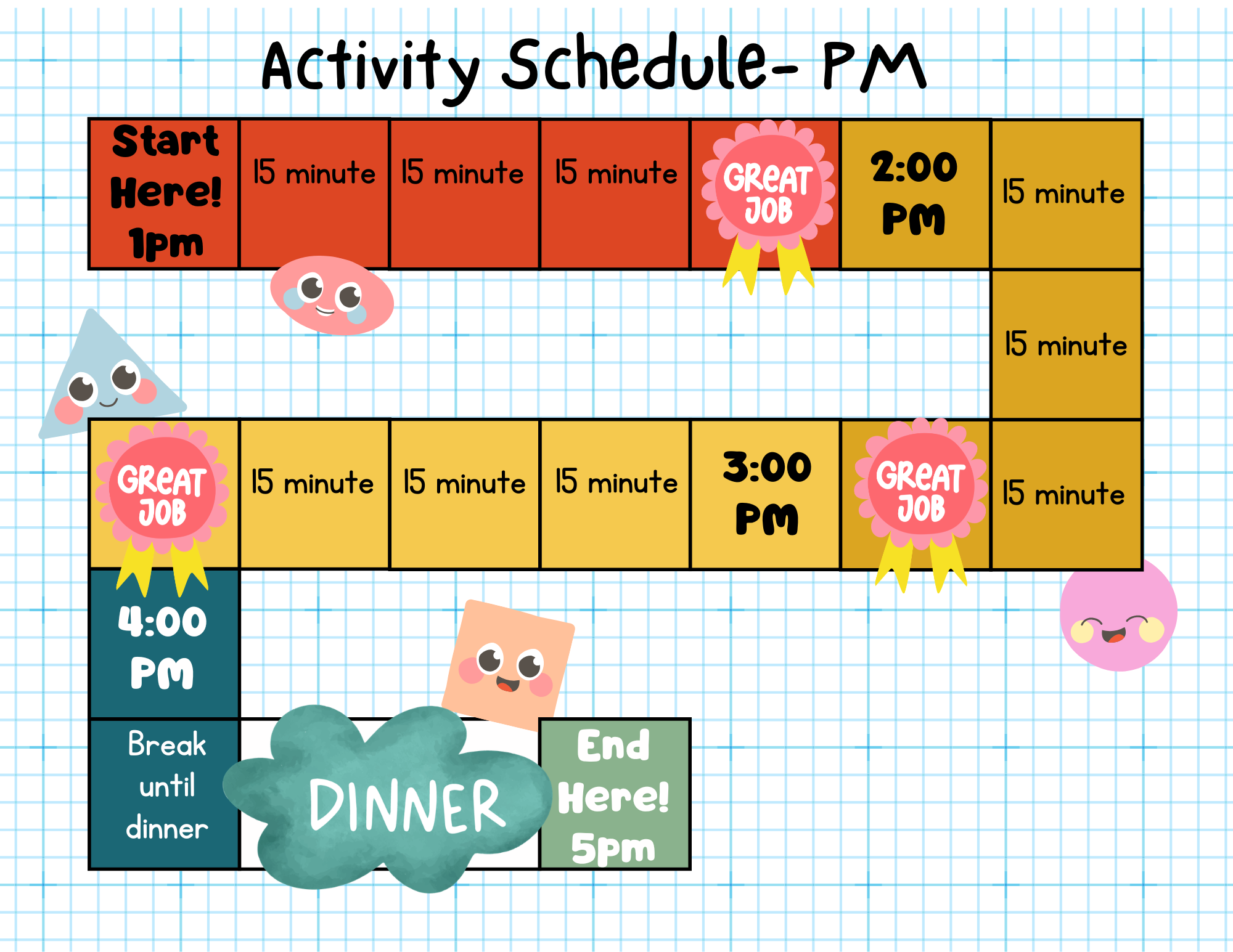
When I shared my concerns about summer break, she suggested creating a highly structured, visual activity schedule designed to encourage independent autonomy. The schedule resembles a board game, making it simple and motivating for children to follow on their own.
For younger children, it may begin with just two or three ten-minute blocks of independent play.
That may not sound like much.
But for a parent who is constantly "on," twenty or thirty uninterrupted minutes can feel absolutely life changing.
The concept itself is simple.
Imagine your child in their room with two activities—perhaps a puzzle and a sorting game, building blocks and matching cards, or any other preferred activities. The parent pulls out however many activities are in that one-time space, and the child picks what activity to work on first. They will be instructed to continue working on it until a timer goes off.
If the puzzle is completed in three minutes, that's okay. The expectation is to take it apart and complete it again until the entire ten-minute block has passed. Once the timer sounds, they move on to the next activity.
Repeat.
When our therapist first explained the idea, my husband and I were skeptical.
We immediately imagined our daughter combining all the materials together, because that's often her default strategy when multiple items are available. But our therapist reminded us that mistakes and learning opportunities are part of the process.
If an activity isn't completed as intended, we simply discuss what happened, provide support where needed, and move forward. The reward associated with that period of independent work is not earned, but the opportunity to practice remains.
The rewards themselves don't need to be elaborate or expensive.
They can be praise, a dance party, a favorite activity, extra time with Mom, a sticker, or a special activity outside. The reward simply comes after successfully completing the independent activity schedule.
And then something amazing happened.
During therapy, she did it.
Not only did she do it, but she exceeded every expectation I had.
I was genuinely shocked. We celebrated with praise, excitement, high-fives, and plenty of encouragement. I was so encouraged, in fact, that I immediately went home and purchased additional activities to expand our options for summer.
Then our therapist suggested something even more ambitious.
Three fifteen-minute activity blocks.
Forty-five minutes of independent engagement.
45 minutes!!!
As a parent, I could hardly believe it.
Of course, she reminded me that this level of independence won't happen overnight. Like every new skill, it requires practice, consistency, patience, and time. The first week may require significant support. There may be resistance. There may be setbacks.
But we keep going.
Because the goal isn't perfection.
The goal is independence.
And for our children with PWS, every small step toward independence matters.
What excites me most about this strategy is that it benefits everyone. It gives our children opportunities to build confidence, develop new skills, and learn how to manage their time. At the same time, it allows parents the ability to complete household tasks, focus on work, support siblings, or simply sit quietly for a few moments without interruption.
I printed our activity schedule, laminated it, and displayed it where she can access it independently. I hung a clock to build upon another skill. Connecting the schedule to actual time creates another meaningful opportunity to practice time-telling skills.
We'll include reading activities, math practice, matching games, fine motor tasks, and other educational opportunities throughout the schedule. The possibilities are endless.
When I shared the idea with Dr. Pacha, she loved it as well. As always, she has an incredible ability to take a great idea and make it even better.
So, stay tuned for more and better resources from us.
The beauty of our PWS community is that we are always helping each other. When we find something that works, we share it.
That's what this community does.
We support one another. We learn from one another. And together, we help each other navigate the challenges—and celebrate the victories—that come with raising extraordinary children.
As always, EmpowerED Solutions is here for you: providing education, consultation, family support, and the reminder that you never have to navigate this journey alone.
This version strengthens the opening, improves transitions between sections, and ends on a more powerful, community-centered note while keeping your personal experience at the heart of the story.
Much love,
Sheri, mother to Lyra, age 7 living with Prader-Willi Syndrome
P.S. I wanted to add one more piece of our journey that may resonate with other families. Part of our challenge has been learning that unrestricted access doesn't just apply to food—it can also apply to toys, books, and activities. For many children with Prader-Willi syndrome, too many choices and too much visual stimulation can feel overwhelming rather than enjoyable.
When my daughter was younger, even having all of her books visible on a bookshelf in her bedroom became too much for her. We would often wake up to piles of torn pages scattered across the floor. After a lot of trial and error, we moved her bookshelf into her closet and added a lock to the door. That simple change dramatically reduced her anxiety, and for years now her books have remained safe—and so has her sense of calm.
Our next project is tackling the toy situation in a similar way. I've purchased locking cabinets so that only a few items are available at a time. My plan is to rotate three toys or activities at once while keeping everything else stored away. I'm hopeful this will help reduce anxiety, lessen obsessive sorting behaviors, and make playtime feel more manageable and enjoyable.
Living with Prader-Willi syndrome often means constantly adjusting, learning, and pivoting. There is no perfect formula—only meeting our children where they are and responding to what they need in that moment. Right now, this is where our journey has led us.
If sharing these experiences helps even one family feel less alone or gives them an idea to try in their own home, then it is worth putting these words out into the world.